Within the walls
Inside the Tiger’s Nest
Inside Tiger’s Nest, widely cited accounts describe four main temples and eight caves built into the cliff around Taktsang Senge Samdup, the meditation cave at the complex’s heart. The temples hold a venerated image of Chenrezig and murals of Guru Rinpoche’s Eight Manifestations. Some inner sanctums may be open only at certain times or to pilgrims, and photography inside the temples is never permitted.
The complex
Four temples, eight caves, one sacred core
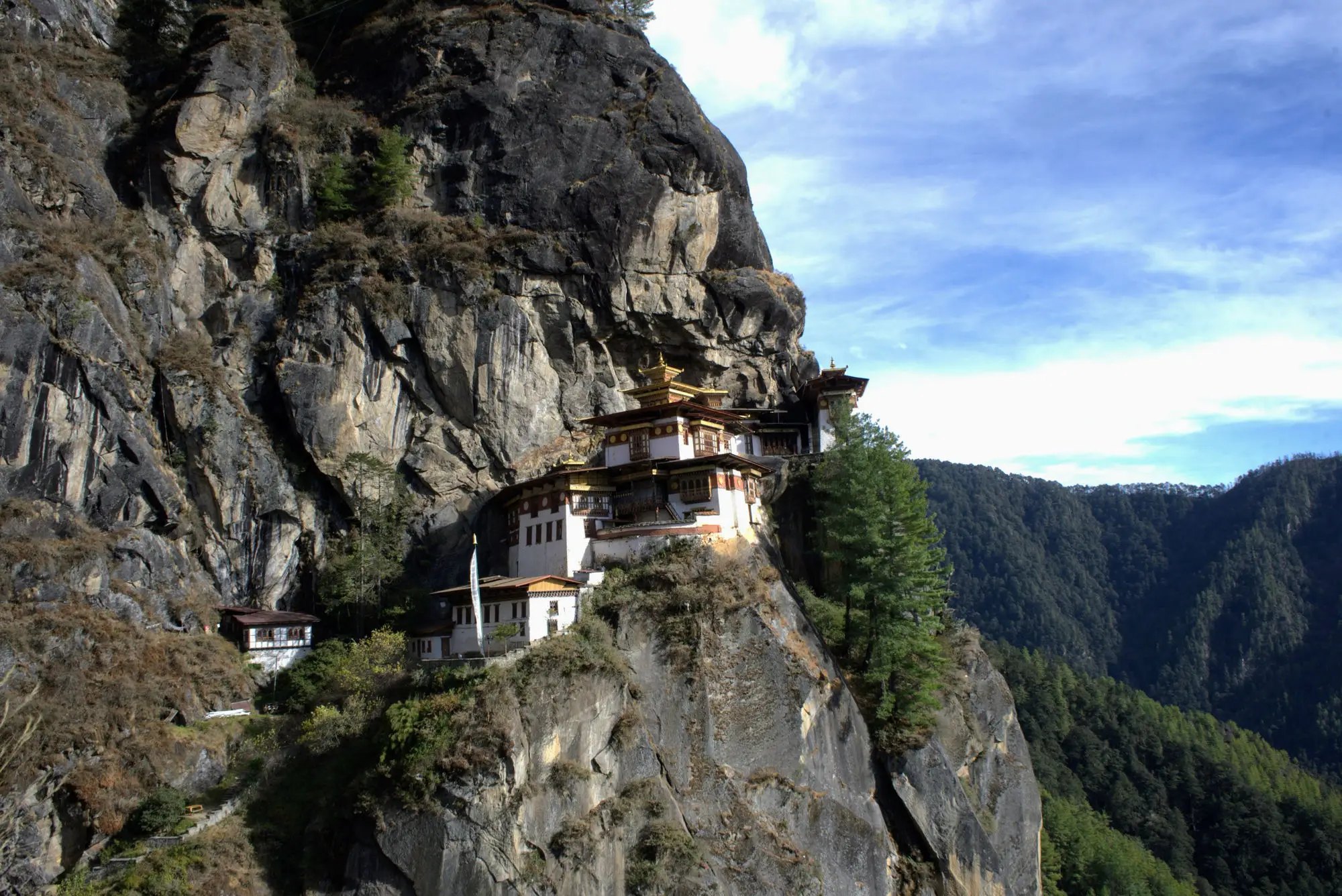
The complex comprises several temples (lhakhangs) and monks’ quarters, built into the cliff around a cluster of sacred caves and linked by rock-cut stairways and a few wooden bridges, some 900 metres above the valley floor. (Widely cited accounts describe four main temples and eight caves; a detailed traditional account names nine sacred caves and ten lhakhangs.) At its heart is Taktsang Senge Samdup, the meditation cave where Guru Padmasambhava is said to have meditated — the spiritual centre around which everything else was built.
A sacred landscape
Caves, holy waters and temples
A traditional account maps a far richer sacred geography across the cliff. Among the caves, Pel Phug is where Guru Rinpoche meditated on the deities of the magic dagger (the phurpa), still preserved there; Machig Phug bears the footprint of Machig Labdron; and the Drubkhang, the inner sanctum, weeps holy water from bare rock even in the dry season. Five drubchus (miraculously founded holy springs) ring the site. The Droloe Lhakhang takes its name from Dorje Drolo, the tiger-riding manifestation that was its principal image before the 1998 fire.
What’s within
Statues, murals and gold-dust scripture
The temples hold images of Bodhisattvas and a venerated image of Chenrezig (Avalokiteśvara), the bodhisattva of compassion, amid rows of butter lamps. The walls carry murals and thangkas of Guru Rinpoche’s Eight Manifestations, his twenty-five chief disciples, and the tiger-riding Dorje Drolo. Tradition tells of a sacred scripture written in gold dust.
Good to know
The Paro Tshechu is not held here
A common mix-up: the famous Paro Tshechu festival — masked cham dances and the dawn unfurling of the giant thongdrel scroll — takes place at Paro Rinpung Dzong down in the valley, not at Tiger’s Nest. The monastery itself is a quiet, active place of worship; some inner sanctums may be open only at certain times or to pilgrims, and interior photography is never permitted.
See it with someone who knows it
Little Bhutan is a locally owned operator whose Tiger’s Nest Expedition includes your guide, permits, government fees and hotels — so you just turn up and climb.
Plan Your Trip See all Bhutan tours
Trips arranged by Little Bhutan · locally owned & operated