The story
History & legend of the Tiger’s Nest
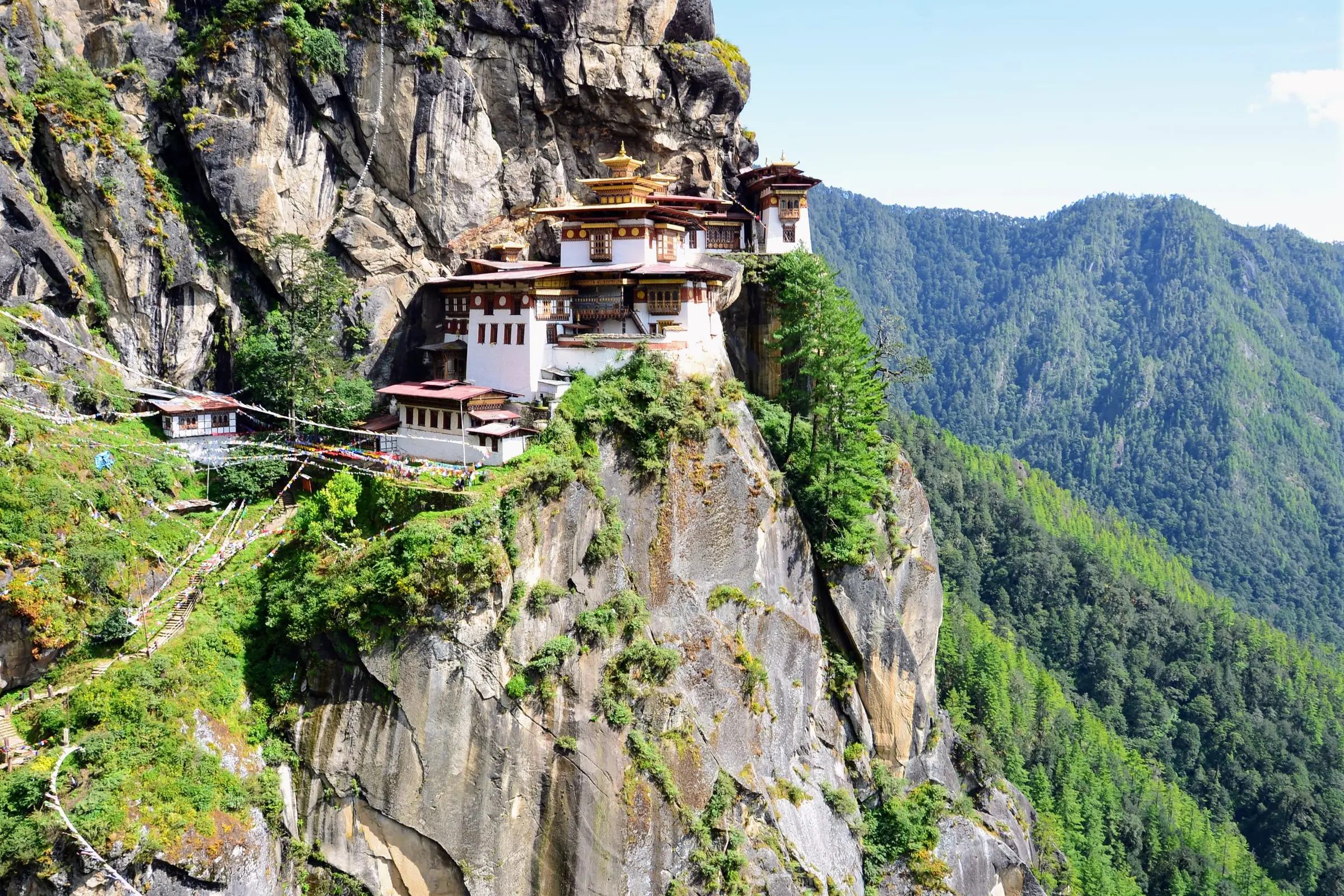
Bhutanese tradition holds that Guru Padmasambhava flew to the Taktsang cliff on the back of a tigress in the 8th century and meditated in the cave there. The monastery built around that cave was founded in 1692 by Gyalse Tenzin Rabgye. A fire on 19 April 1998 severely damaged the main building; the restoration was completed in 2005.
The legend
Guru Padmasambhava and the tigress
According to tradition, the great tantric master Guru Padmasambhava (Guru Rinpoche) flew to this cliff on the back of a tigress in the 8th century and meditated in the cave now called Taktsang Senge Samdup for “three years, three months, three weeks, three days and three hours,” subduing the local demons. The name Taktsang means “Tiger’s Lair.” The site is linked to Padmasambhava’s wrathful, tiger-riding manifestation, Dorje Drolo.
The founding
From sacred cave to monastery, 1692
The monastery complex was founded in 1692 by Gyalse Tenzin Rabgye, the 4th Druk Desi of Bhutan, who was believed to be a reincarnation of Padmasambhava. It was built directly around the meditation cave, and the principal two-storey temple was completed and consecrated in 1694. The monastery is dedicated to Padmasambhava as the “Shrine of the Guru with Eight Names,” a reference to his Eight Manifestations.
19 April 1998
The fire — and the rebuilding
On 19 April 1998 a fire severely damaged the main building, destroying priceless paintings, statues and artefacts and taking the life of one monk. The cause was never conclusively established — sources point to either an electrical fault or butter lamps igniting fabric hangings. Under King Jigme Singye Wangchuck, the government oversaw a restoration costing roughly 135 million ngultrum, completed by 2005 using traditional Bhutanese techniques and craftsmanship.
Walk into the story yourself
Little Bhutan is a locally owned operator whose Tiger’s Nest Expedition includes your guide, permits, government fees and hotels — so you just turn up and climb.
Plan Your Trip See all Bhutan tours
Trips arranged by Little Bhutan · locally owned & operated